White and fine
The German breed description gives a wool fibre diameter of 26–28 micrometres.
ĀBELĪTES / PASTURE MANAGEMENT
Sheep are part of our grassland management and everyday farm life. We choose a breed with a calm flock and local conditions in mind.
BREED NAME
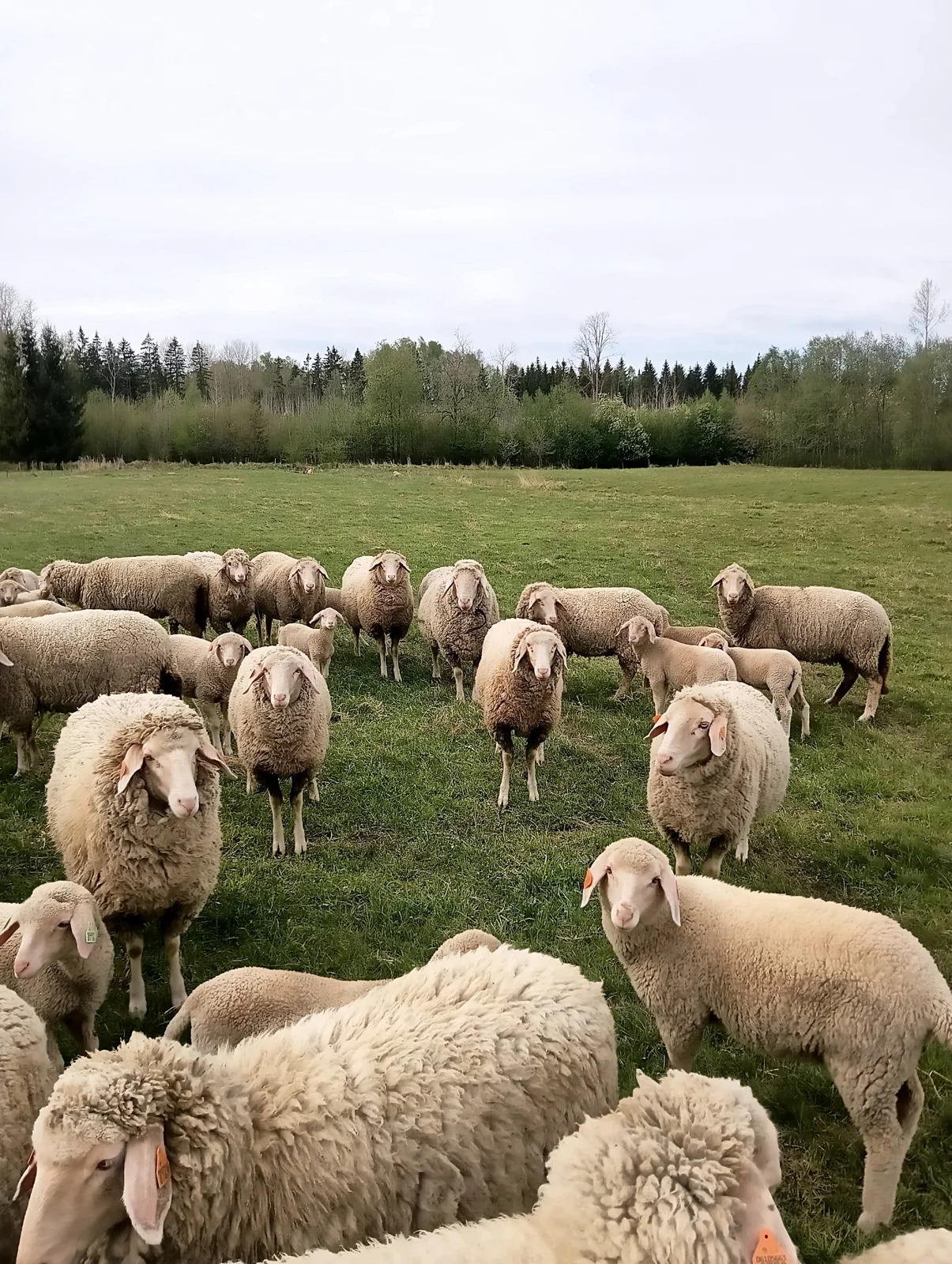
MerinolandschafGerman local sheep with fine white wool.
01 · BREED PORTRAIT
Merinolandschaf developed in the 19th century in southern and central Germany by crossing local sheep with fine-wool Merino sheep.
German breed description ↗The German breed description gives a wool fibre diameter of 26–28 micrometres.
Broad, slightly drooping ears and a tuft of wool on the forehead are characteristic features.
The breed is reared for both wool and meat. These sheep are suited to grazing and landscape management.
02 · SHEEP AT ĀBELĪTES
At first, sheep helped graze areas that were hard to maintain with machinery. Their role has since grown: they support our grazing work and help keep the landscape open.
 OPEN PHOTO ↗
03 · BREEDING AND LAMBS
Choose what you would like to ask about. We will confirm which animals are currently available, their prices and the available pedigree documents.
About lamb and mutton ↗Our small goat herd helps control shrubs and tree regrowth. Milk and cheese production are not currently part of our active offering.
Farm tour ↗THE SEASONAL RHYTHM OF GRAZING
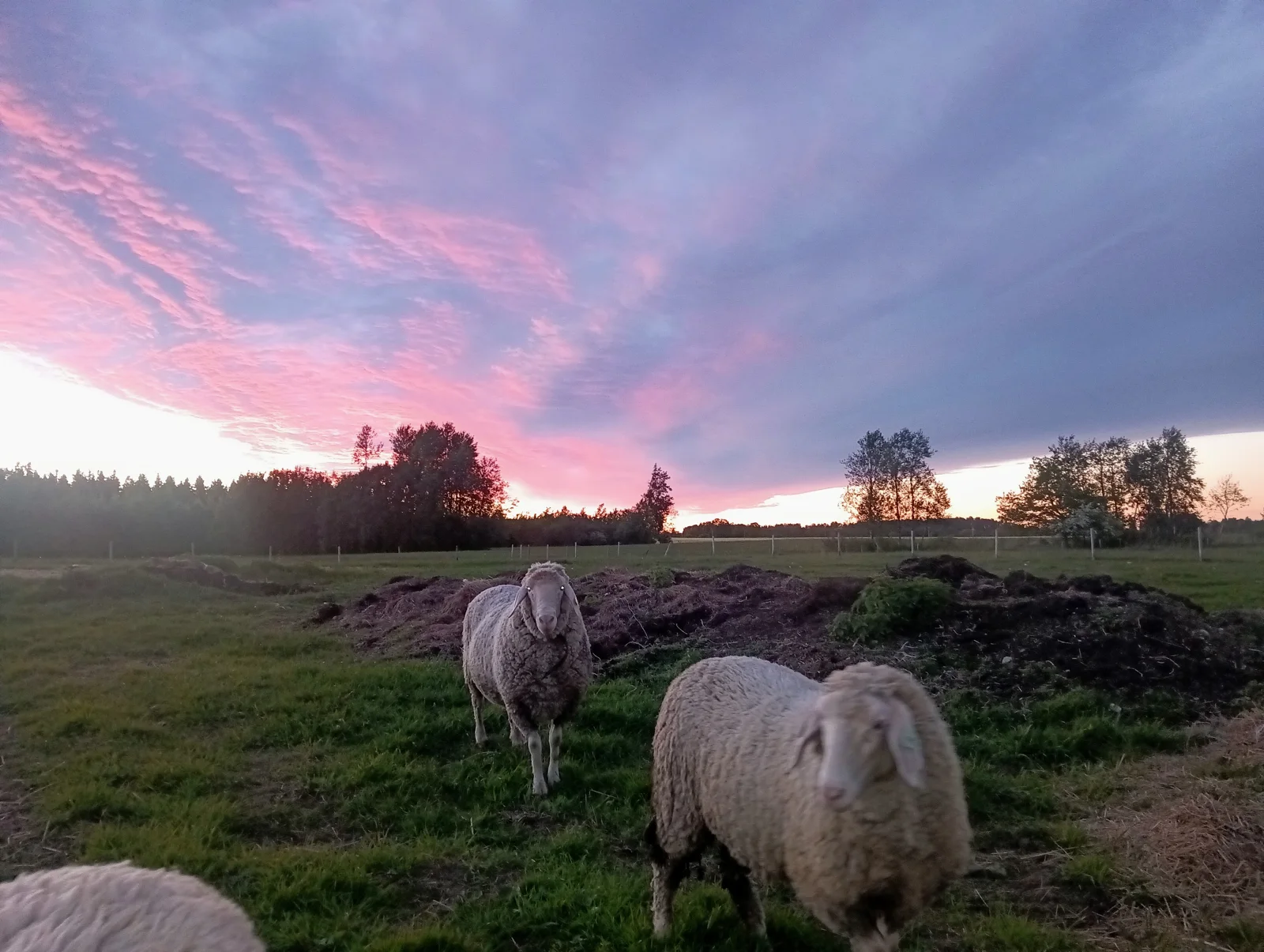
We rotate grazing areas, giving the grass time to regrow.
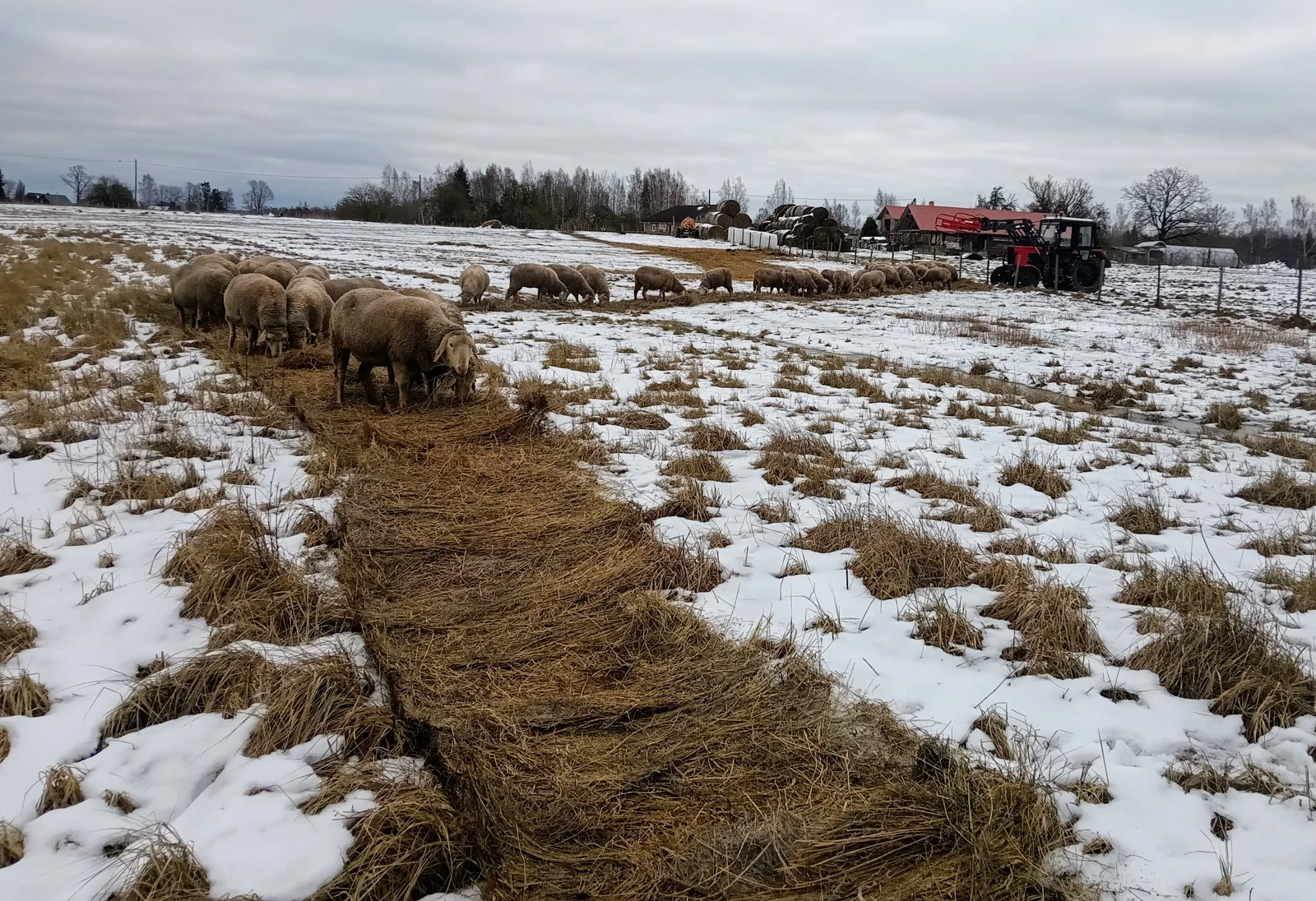
Field feeding is part of our daily work in winter too.
04 · EVERYDAY HERD LIFE
The our photographs show daily life with the herd and pastures at Ābelītes. Open a photo, browse the gallery or save images to your favourites.
Photographs from our farm. Web copies are optimised and cropped for display; the originals are preserved unchanged. The photographs do not confirm the availability of specific animals or meat boxes.
THE OWNERS’ FULL STORY
Sheep farming: Shaping the landscape and producing premium grass-fed meat Sheep were originally brought to the farm for a practical purpose — efficiently grazing the more difficult areas that are hard to mow with machinery. Over time, however, we quickly came to appreciate their unique role in our ecosystem and their contribution to the farm’s sustainability and diversification.
Breed and welfare: German Merino Local (VMV) We chose German Merino Local (VMV) as our main breed because it is ideally suited to our extensive approach to farming:
A calm disposition and immunity: VMV sheep have a balanced temperament, strong immunity and an excellent ability to adapt to Latvia’s changeable weather.
100% natural feed: Like our cattle, the sheep eat only grass and hay from the farm’s natural meadows, without supplementary industrial concentrate feed.
A regenerative role in grazing rotation Sheep have a special place in our regenerative grazing chain. Following cattle in rotational grazing, they eat the remaining vegetation and naturally aerate the topsoil with their hooves, encouraging lusher grass regrowth. In this way, sheep help maintain botanically rich meadows and make the most effective use of every hectare of pasture.
Excellent meat quality and mutton production Thanks to the VMV breed’s good weight gain and natural grassland diet, we produce tender, nutrient-rich lamb.
Alongside ordinary lamb, we raise part of the flock for more than a year, allowing the animals to develop naturally and grow on organic pastures. This produces higher-value mutton with a more distinctive taste — a sought-after delicacy with a deeper, richer flavour profile and high nutritional value, particularly appreciated by true meat enthusiasts.
05 · GET IN TOUCH
“Ābelītes”, Bukaiši parish, Dobele municipality.
Visits by prior arrangement.
SHEEP PHOTO JOURNAL
Grazing, close-up portraits and encounters with people — real moments on the farm.