01 / 03
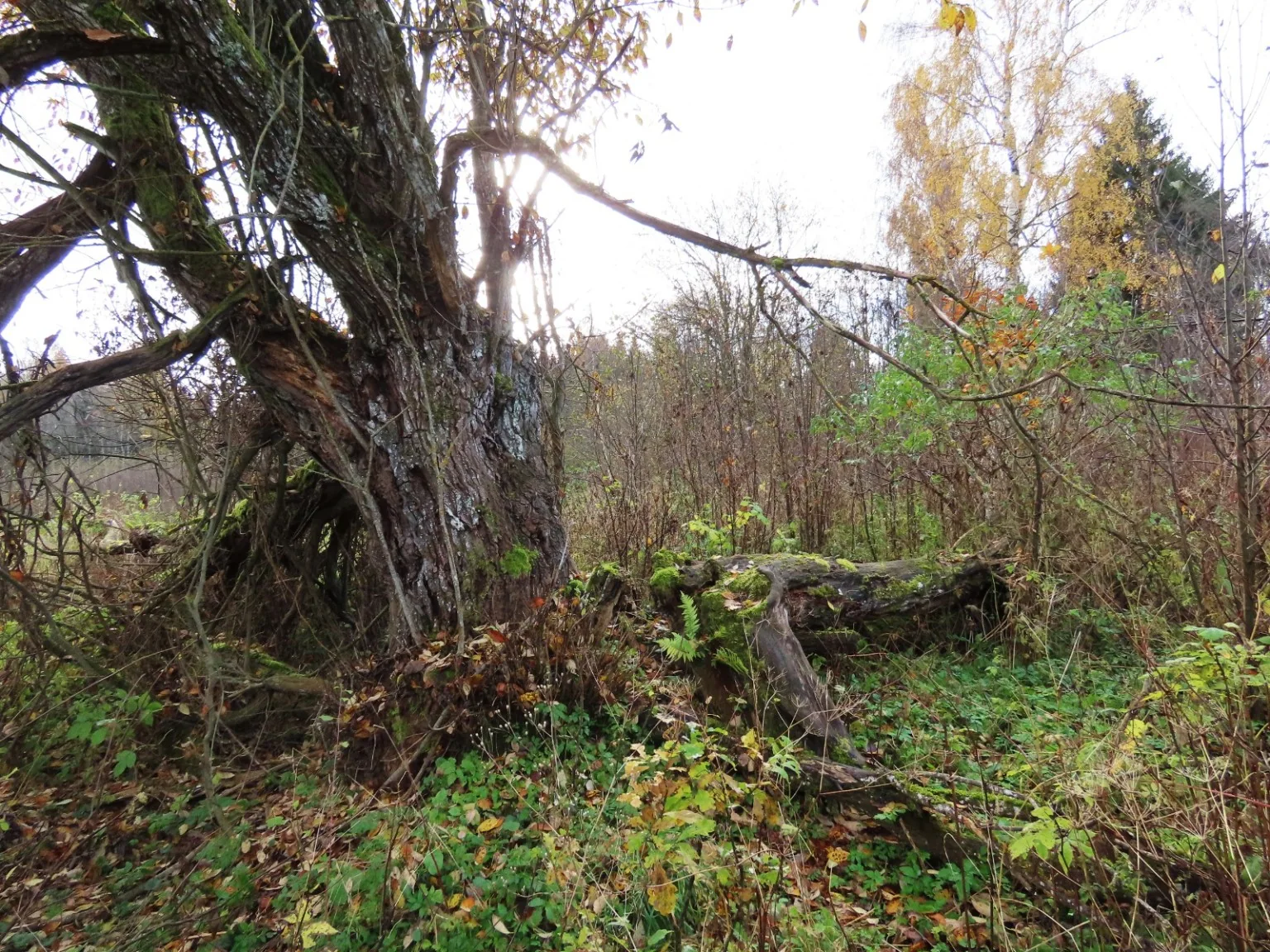
Goat willow
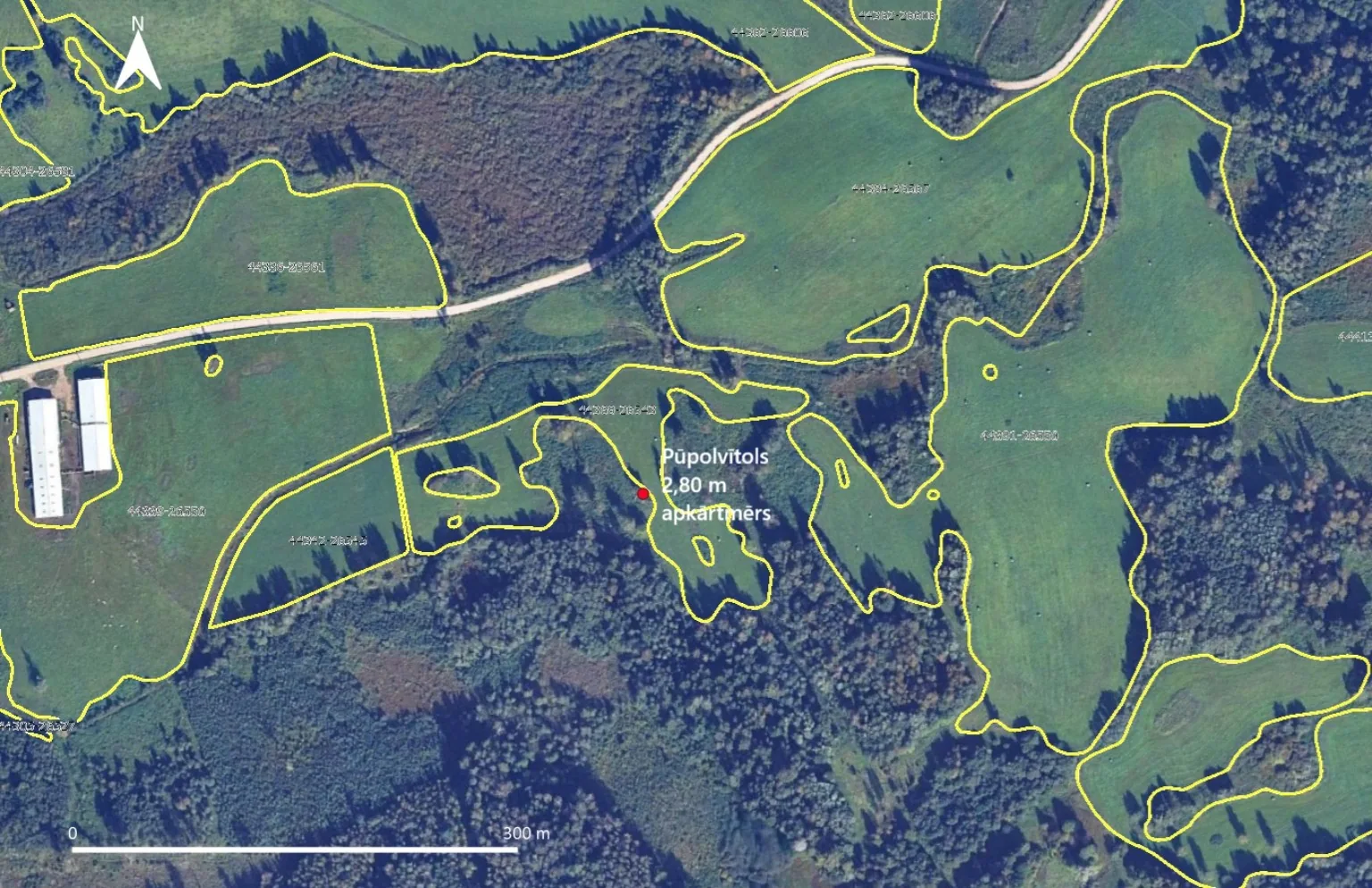
Trunk circumference as supplied by the owners
2,80 mĀBELĪTES / DISCOVER AND PROTECT
The farm’s surroundings have their own natural stories. We are adding photographs of identified trees, the farmers’ memories and verified details to this section.
01 / A TREE AS A HABITAT
Look at the tree’s silhouette, bark and place in the landscape. A particular tree’s species and protection status are determined from precise information, not an image alone.
GOAT WILLOW / THE OWNERS’ STORY
A goat willow with a trunk girth of 2.26 m grows on our farm. Discover its story, photographs and the location map we have prepared.
The tree’s age, girth, exact location and protection status have not yet been confirmed. The photographs show trees on the farm; the owners will confirm the pairing of each photograph with a mapped tree.
We plan to create an educational trail introducing plants typical of Latvia’s natural environment. We will announce access and visiting arrangements once the idea becomes reality.
Current tour options ↗03 / PHOTO GALLERY
Illustrations and labelled examples from other locations. Open an image for a closer look.
ĀBELĪTES · REMARKABLE TREES
The owners supplied three location maps with measured trunk circumferences. Explore each location and photographs of trees on the farm.
The owners marked the locations on map screenshots. These are illustrative maps, not verified GPS navigation. Arrange access with the farm owners.
Trunk circumference as supplied by the owners
2,80 m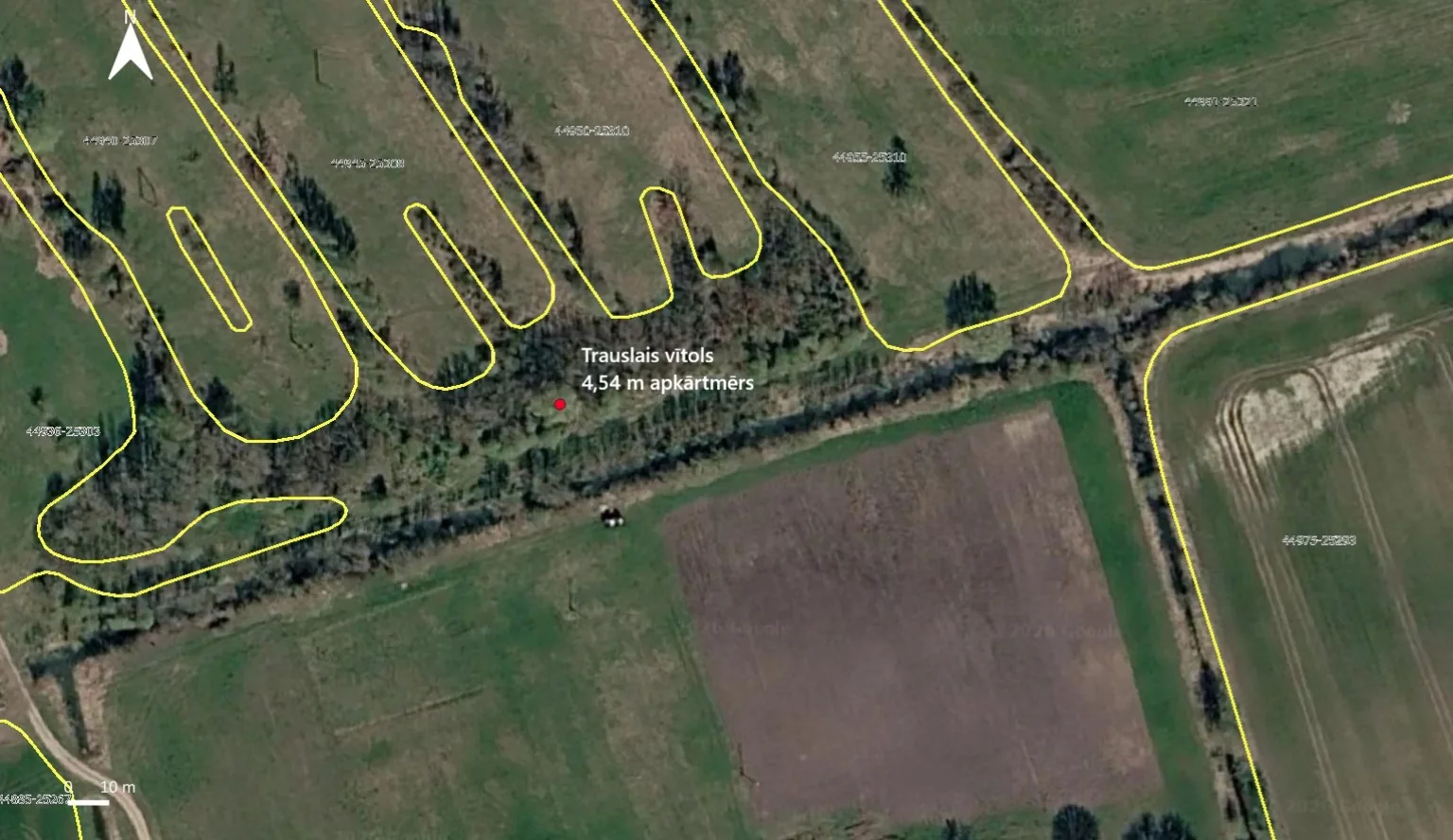
Trunk circumference as supplied by the owners
4,54 mThis tree’s full story and printable QR ↗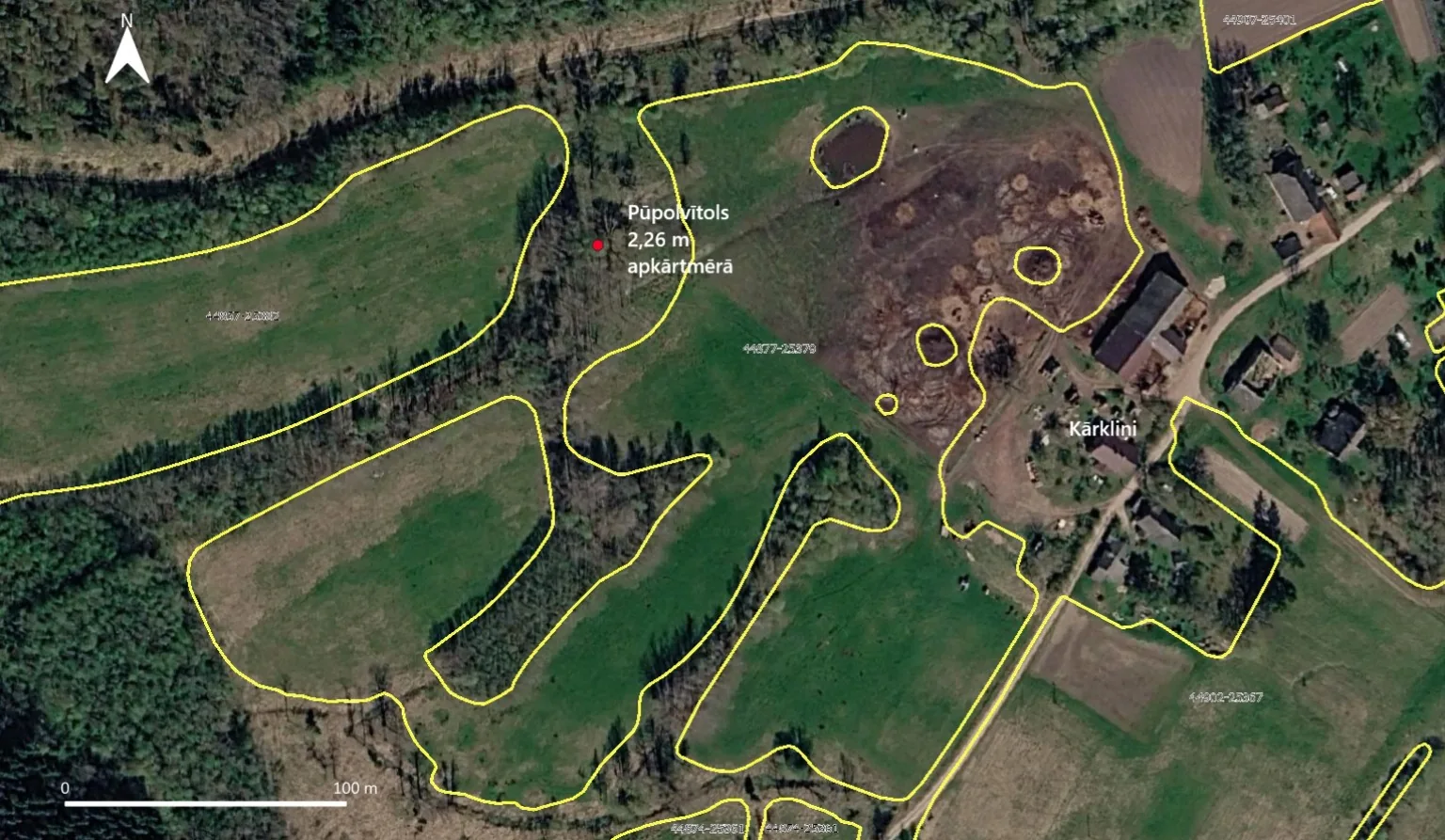
Trunk circumference as supplied by the owners
2,26 mThis tree’s full story and printable QR ↗THE OWNERS’ FULL STORY
The interaction of life, soil and landscape: Our pastures and woody-plant ecosystem in the Bukaiši area In Bukaiši parish, our organic farm restores the balance between sustainable agriculture and original natural diversity. Drawing on international agroforestry and agroecology knowledge, the 26 woody-plant species in our pastures are not separate from production — together with rotational grazing on natural grasslands, they form a unified, self-regulating ecosystem.
Our herds — young Galloway cattle, German Merino Local (VMV) sheep and a small group of goats — actively shape the landscape. Grazing unploughed habitats opens up the grassland structure, leaves room for rare meadow flowers and orchids, and maintains an open mosaic of woodland edges.
The strength of underground soil and nature’s pharmacy Mycorrhiza and trace elements: Because the soil is neither ploughed nor treated with chemicals, tree roots and the carpet of natural grassland maintain a healthy mycorrhizal fungal network. This enables plants to absorb important trace elements such as zinc, selenium, magnesium and iron and bring them to the surface.
Thermal comfort and nature’s pharmacy: Trees provide irreplaceable shade and shelter from wind, reducing stress and supporting animal wellbeing. Bark and shoots of willows, pines and hazels contain natural salicylates, tannins and essential oils, allowing animals to self-medicate naturally and strengthen immunity without medicines.
Pollinators and winged neighbours: Early-flowering willows provide the first spring nectar for bumblebees and organically kept bees, while dense shrubs shelter songbirds and spiders that naturally limit pests.
The 26 woody-plant species of our pastures and habitats 1. Crack willow (Salix fragilis) A monumental stabiliser of banks and moisture: our pastures in the Svētaine river basin contain a nationally significant heritage tree with a circumference of 4.54 m. In spring it is a main source of nectar for bees and bumblebees. Its bark provides the animals with natural salicylate (aspirin).
2. Apple (Malus domestica) A rich spring nectar source for pollinators. In autumn, its fruit supplements the herd’s diet and feeds overwintering woodland birds, while old trunks provide homes for cavity-dwelling species.
3. Pear (Pyrus communis) Deep roots bring minerals up from underground layers. Early white flowers feed pollinators, while dense wood and a thick crown offer safe shelter for birds.
4. Plum (Prunus domestica) Provides abundant pollen for bees in the first weeks of spring. Its shoots and branches at woodland edges create additional windbreaks for the herds.
5. Bird cherry (Padus avium) Releases strong phytoncides while flowering, naturally cleansing the air and repelling biting midges and pasture pests. Its autumn berries feed thrushes and other birds.
6. Silver birch (Betula pendula) A light-demanding species that maintains a bright, sunny pasture microclimate. Its spring sap is rich in minerals, while its buds and leaves naturally strengthen immunity.
7. Norway spruce (Picea abies) An evergreen screen protecting the herd from harsh winter winds and snow. Its young spring shoots are rich in vitamin C and essential oils.
8. White willow (Salix alba) A large tree with silvery foliage that efficiently absorbs excess moisture in wetter corners of the pasture. Tannins and salicylates in the bark help regulate the animals’ digestion.
9. Guelder rose (Viburnum opulus) A shrub with striking white flower heads and bright autumn berries rich in vitamin C. An important source of winter food for birds and an essential element of woodland-edge habitats.
10. Midland hawthorn (Crataegus laevigata) A thorny shrub whose branches form impenetrable fortresses for nesting songbirds. Its flowers and fruit are powerful natural means of supporting the cardiovascular system.
11. Blue willow (Salix caesia) A plant of wetlands and wetter pastures with blue-green foliage. It stabilises soil, encourages water filtration and provides habitat for moisture-loving insects.
12. Grey alder (Alnus incana) A natural nitrogen fertiliser: bacteria in its root nodules fix atmospheric nitrogen, naturally enriching grasslands and improving the nutritional value of forage.
13. Goat willow (Salix caprea) A tree of life and a heritage tree, reaching a circumference of 2.26 m in our pastures. The first and most important spring restaurant for bumblebees and bees. Its shoots are healthy forage for goats and cattle.
14. Pedunculate oak (Quercus robur) A symbol of pasture grandeur and stability. The crown and roots of one old oak support thousands of insect and microorganism species. Its autumn acorns provide a nourishing, mineral-rich supplement for woodland wildlife.
15. Sweet cherry (Prunus avium) A splendid spring attraction for pollinators. Its fruit feeds winged neighbours in early summer, while the tree adds visual diversity to the pasture.
16. Hazel (Corylus avellana) Provides pollen in early spring and nutrient-rich nuts in autumn. Its flexible branches and leaves are very popular supplementary forage for goats and sheep at woodland edges.
17. Small-leaved lime (Tilia cordata) The main nectar plant of the hottest summer month, attracting hundreds of bees when in flower. Its heart-shaped foliage creates dense, pleasant shade for the herd.
18. Wych elm (Ulmus glabra) A strong tree with asymmetrical, rough leaves. It enriches underground mycorrhizal networks and provides a robust structure in woodland-edge habitats.
19. Ash (Fraxinus excelsior) A tall forest giant with an airy crown that allows sunlight to reach the lower meadow layer. It provides strong timber and maintains a sunny pasture microclimate.
20. Aspen (Populus tremula) A fast-growing tree whose soft wood readily develops cavities for woodpeckers and owls. In winter and spring, its bark and branches provide a nourishing natural pharmacy for woodland animals.
21. European white elm (Ulmus laevis) Characteristic of wetter places and river basins. Its strong root system protects soil against erosion and stabilises water levels in pastures.
22. Scots pine (Pinus sylvestris) An evergreen tree of the sun that fills pasture air with healing phytoncides and the scent of resin. Pine needles and buds support the respiratory health of animals.
23. Norway maple (Acer platanoides) An early spring source of nectar and naturally sweet sap. In autumn, it enriches the soil with nourishing leaf litter and colours the pasture landscape in vivid shades.
24. Elder (Sambucus nigra) A natural guardian of the organic farm: its scent naturally repels garden and livestock pests. Its flowers and berries contain many antioxidants and immune-supporting compounds.
25. Downy hawthorn (Crataegus submollis) A shrub with long thorns and juicy, nutrient-rich, bright red berries. It provides both safe shelter for birds and a rich source of vitamin C in autumn.
26. Crab apple (Malus sylvestris) A rare and valuable species of Latvia’s natural woodland edges and meadows. Its pink-white spring flowers are an irreplaceable nectar source for bees and bumblebees, while its small sour apples provide woodland wildlife with a concentrated source of minerals and organic acids in autumn and winter.
04 / CONTACT
“Ābelītes”, Bukaiši parish, Dobele municipality. Please arrange any visit in advance.